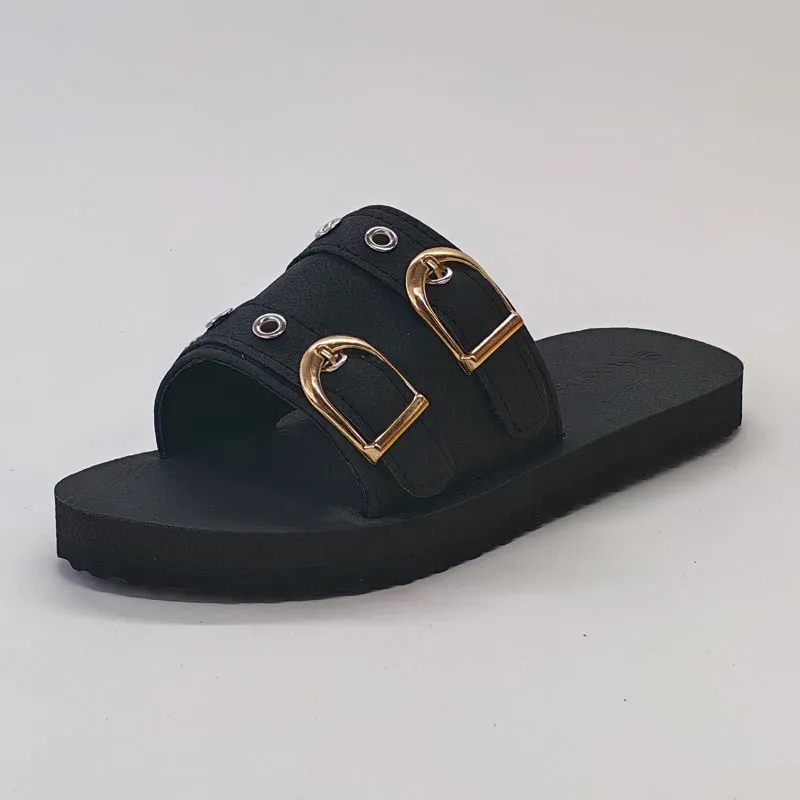
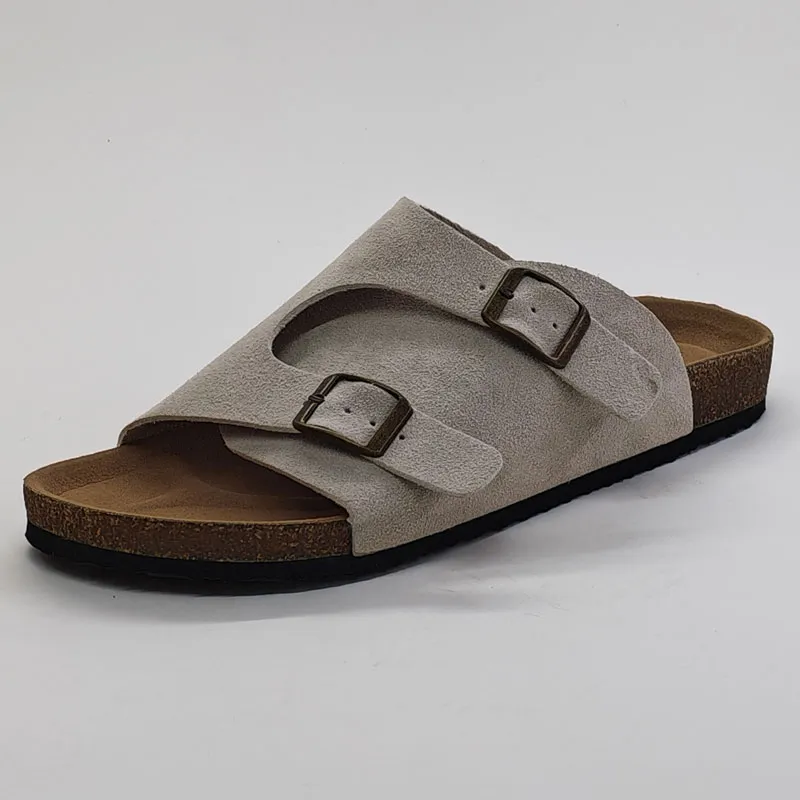
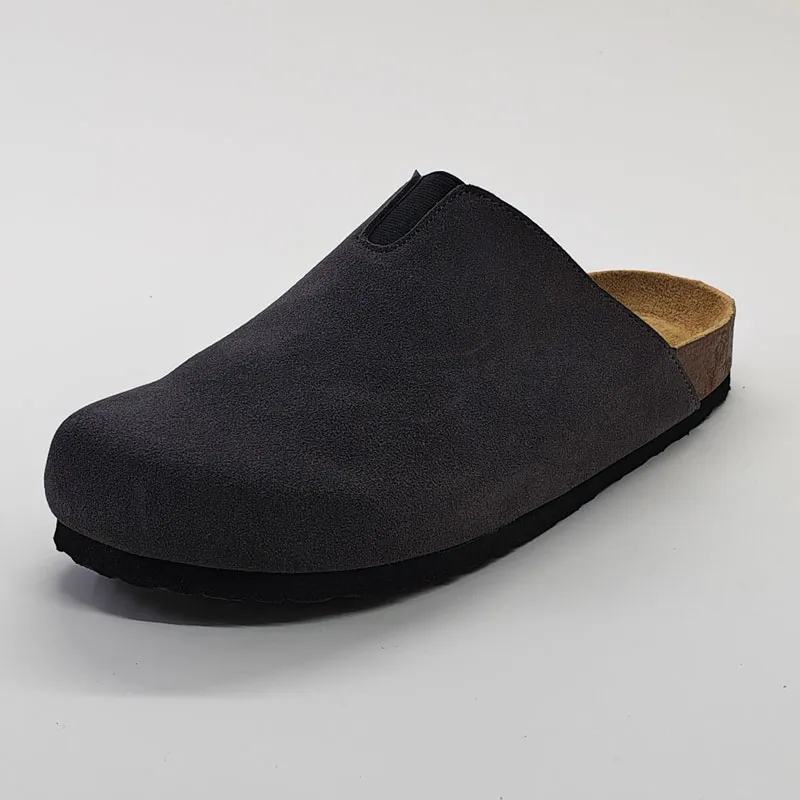
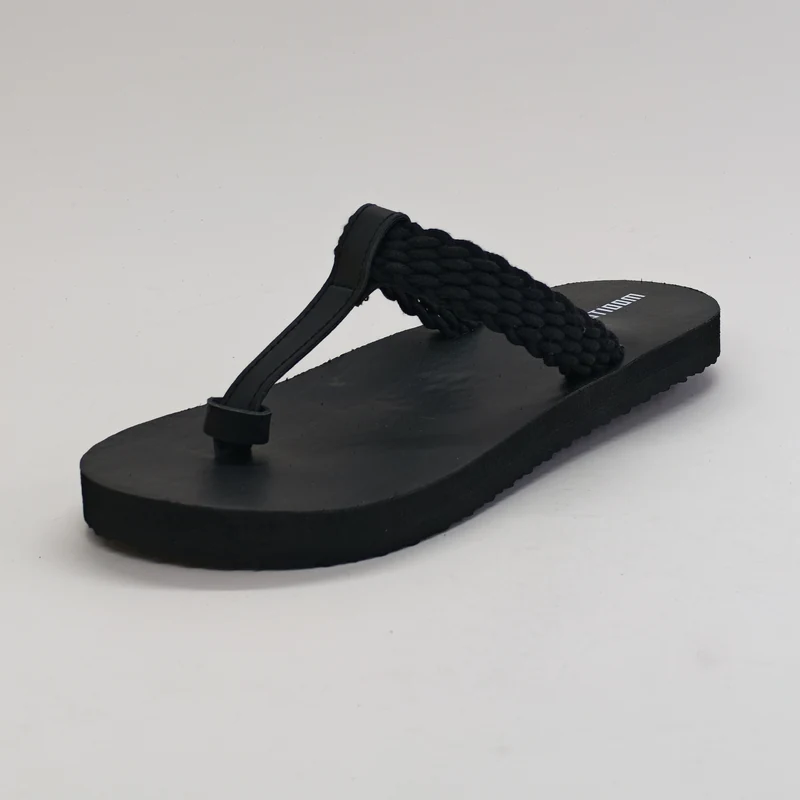
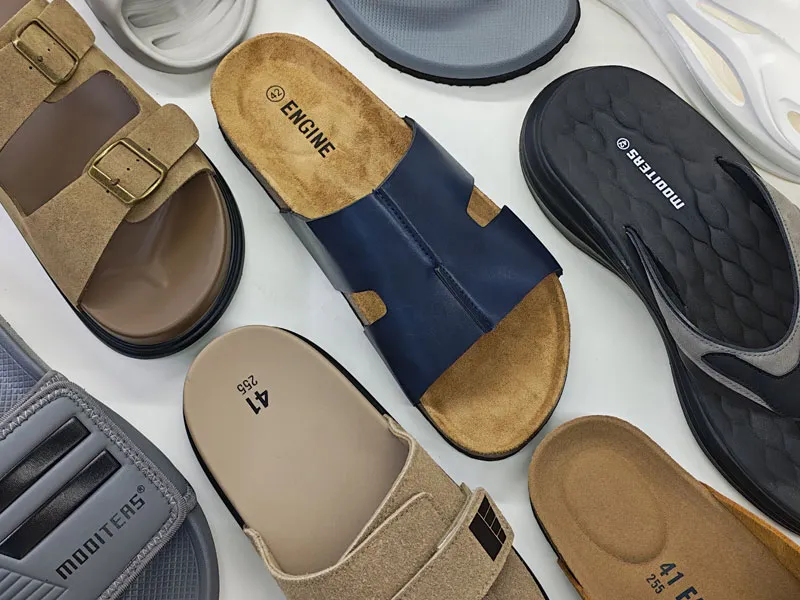
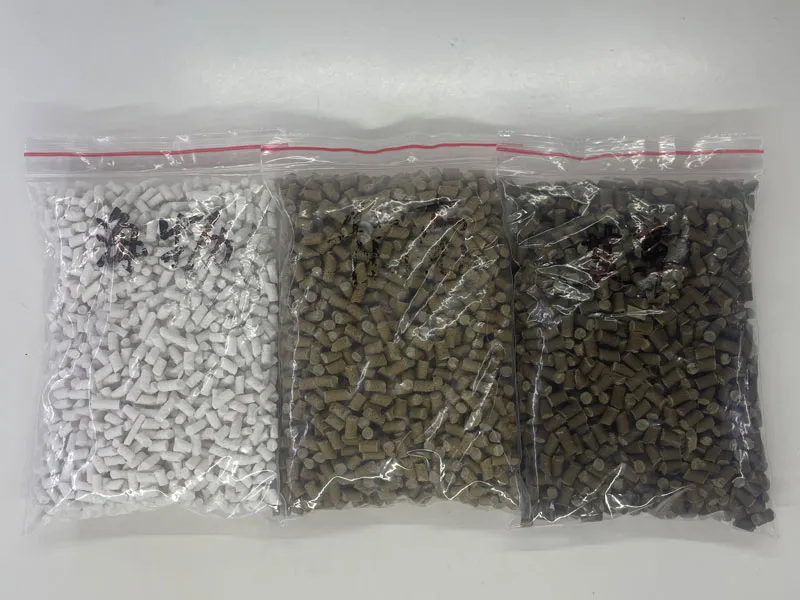
The quality of cork footbed sandals depends on more than whether the footbed contains cork. It is also affected by the material composition, footbed shaping, surface adhesion, outsole attachment, buckles, and size consistency. Cork is a natural material with properties such as elasticity and relatively low density, and it has long been used in footwear and other products. For an introduction to cork's composition and basic properties, see Wikipedia's overview of cork. The specific use of cork composites in footwear varies according to the formulation and design.
For wholesalers, importers, and brand buyers, these details should be reflected in sample reviews, product specifications, and inspection requirements.
The term "cork footbed" does not necessarily mean that the entire footbed is made of solid cork. A product may use cork granules combined with other materials, along with different outsole, top-layer, and upper materials. Confirming the construction before evaluating samples helps buyers avoid making decisions based only on a product name or photos.
What Are the Main Components of Cork Footbed Sandals?
Cork footbed sandals should be assessed as a complete structure, rather than by looking only at the exposed footbed surface. Different products may use different material combinations, so buyers should ask suppliers to confirm the actual material and function of each layer.
| Component | Details to Confirm When Sourcing | What to Check on the Sample |
| Footbed core | Whether it contains cork, whether it is a cork composite, and what material information is available | Check the surface and edges to see whether the construction matches the product description |
| Footbed top layer | Surface material, color, thickness, and finish | Check for unevenness, wrinkles, delamination, or visible defects |
| Footbed profile | Footbed contour, width, edge height, and size specifications | Compare the left and right sandals and different sizes with the approved sample and specifications |
| Outsole | Outsole material, thickness, tread pattern, and attachment method | Check flatness, tread definition, and the bond between the footbed and outsole |
| Upper and buckles | Upper material, attachment method, buckle type, and adjustment range | Check attachment strength, symmetry, and buckle operation |
The construction and components vary by style. Familiarity with footwear terminology for uppers, insoles, outsoles, and other components can help buyers communicate product structures and material requirements more accurately. See the International Organization for Standardization (ISO) footwear terminology for further reference.
For example, cork composite materials may be combined with other materials. Product documentation should therefore state the actual material composition clearly, so that "cork footbed" is not mistaken to mean the entire sandal is made of cork. The use of cork composites in footwear varies according to the formulation and design.
Key Details That Affect Cork Footbed Sandal Quality
Clear information about cork materials and construction. Before placing an order, confirm whether the footbed contains cork, how the cork is combined with other materials, and what material information the supplier can provide. If the buyer has specific requirements for natural cork content or material origin, these should be clarified during the quotation and sampling stages instead of relying on the product name alone.
Footbed shaping and left-right consistency. Check the footbed contour, the shape of the left and right sandals, edge finishing, and the proportions across sizes. Even when two samples look similar, differences in the footbed profile or left-right symmetry may affect the product's appearance and wearing experience. Buyers can use the approved sample as a reference for production and inspection.
Bonding between the surface layer and footbed. Check whether the surface layer is smooth and whether the edges show lifting, bubbles, wrinkles, or visible adhesive marks. For footbeds with a covering layer, also confirm that the coverage, edge finishing, and color match the approved sample.
Attachment between the footbed and outsole. Check whether the outsole edges are neat and the bond is even. After appropriate flexing based on the product structure, look for signs of separation. If the order has specific bond-strength requirements, ask the supplier to confirm the inspection method or applicable test documentation. SATRA provides test methods for assessing sole adhesion in complete footwear, which buyers and suppliers can refer to when discussing testing requirements.
Upper, buckles, and connecting components. Check the position of the straps or upper, left-right symmetry, edge finishing, and buckle operation. For styles with metal buckles, confirm the material, color, and surface finish, and use the approved sample as the reference for bulk production.
Sample and Quality Checks for Cork Footbed Sandals
Sample inspections should follow written specifications. Buyers can prepare a checklist covering materials, dimensions, colors, construction, and appearance, and keep the approved sample or photo records for reference.
Appearance: Check whether the footbed surface is smooth and the edges are neat. Look for noticeable color differences, stains, cracks, or delamination.
Dimensions: Confirm that the length, width, thickness, and key structural dimensions meet the approved specifications, and check that the left and right sandals match.
Attachments: Check whether the upper, buckles, footbed, and outsole are attached securely and neatly.
Flexing performance: Based on the product structure and intended use, flex the sample appropriately and check for unusual cracking or separation in the outsole, footbed, and attachment areas. SATRA TM92 describes an assessment method for damage after repeated flexing of footwear; the specific test conditions should be confirmed for each style.
Outsole abrasion: If outsole wear is a concern, discuss suitable testing with the supplier. Outsole abrasion performance depends on the material, product construction, and conditions of use. Understanding the basic mechanisms of material wear can help buyers set more relevant outsole inspection requirements and discuss appropriate abrasion tests with suppliers. See Wikipedia's overview of wear for more information.
Packaging and labeling: Check that the size, color, style number, packaging method, and carton markings match the order.
These checks are sourcing recommendations, not mandatory requirements that apply to every product. Requirements may vary by market, customer, and product positioning. Buyers should document the final acceptance criteria in the purchase order or inspection documents.
How to Maintain Quality Consistency from Approved Samples to Bulk Production
Quality management for cork footbed sandals depends on ensuring that the supplier, buyer, and inspector are working from the same approved information.
First, the approved sample should represent the style, materials, colors, buckles, sizes, and packaging included in the order. After sample approval, keep the physical sample or clear photos and record the key specifications. If the materials, footbed construction, or outsole change before production, confirm the changes again.
Next, buyers can check key production items according to the order, such as materials and colors, sizes, footbed surfaces, upper attachments, and outsole bonding. During final inspection, compare the bulk order with the approved sample and verify the packaging labels and quantities.
For orders requiring third-party testing, confirm the test items, sample quantity, test conditions, and acceptance criteria in advance. Outsole abrasion, footwear flexing, and sole adhesion can be discussed as potential tests, but the specific plan should be determined by the buyer and supplier based on the product construction.
Sourcing Cork Footbed Sandals with Lucky-Step
QUANZHOU LUCKY-STEP IMPORT & EXPORT TRADING CO., LTD. was established in 2011. The company is a footwear trading business offering products such as sandals, flip-flops, slides, and clogs. For wholesalers, importers, and brand buyers developing a cork footbed sandal collection, Lucky-Step can discuss product styles, target customers, sizes, colors, and customization requirements, and assist with sample and order confirmation.
Before sourcing, buyers can provide reference styles, target markets, material requirements, size ranges, colors, and packaging needs. The material composition, available options, MOQ, pricing, lead time, and inspection arrangements should be confirmed for each style and order.
Frequently Asked Questions About Cork Footbed Sandal Quality
1. Are cork footbeds in sandals always made of pure cork?
No. A product may use cork composite materials or combine cork with other materials. Buyers should confirm the exact material composition with the supplier and specify it in the product documentation or purchase order.
2. Can the quality of cork footbed sandals be judged by looking at the footbed surface alone?
No. Surface appearance is only one part of the assessment. Buyers should also check footbed shaping, surface adhesion, outsole attachment, upper and buckle workmanship, size consistency, and left-right matching.
3. Should buyers be concerned if the surface layer on a cork footbed is lifting or has bubbles?
Yes. Lifting, bubbles, or visible wrinkles may affect the product’s appearance and can indicate a bonding issue. Buyers should assess the sample against the approved sample and the acceptance criteria in the order.
4. How can buyers check the attachment between the footbed and outsole?
First, check whether the outsole edges are even and the bond is consistent. Then carry out an appropriate flexing or bonding check based on the product structure. If the order specifies bond strength, confirm the applicable test method with the supplier.
5. Which bulk inspection items should be compared with the approved sample?
Compare the style, materials, colors, sizes, footbed profile, upper or buckles, outsole, packaging, and labels. If the order includes specific testing requirements, verify that the relevant records correspond to the current batch.
6. Should buyers use the same quality standards for every cork footbed sandal style?
Not necessarily. Different styles, material constructions, target markets, and use requirements may call for different acceptance criteria. Buyers can use a basic checklist and add style-specific requirements for dimensions, appearance, and testing.
Conclusion: Confirm Materials, Construction, and Inspection Requirements Together
The key details that affect cork footbed sandal quality include the cork material information, footbed shaping, surface adhesion, footbed-to-outsole attachment, upper and buckle workmanship, and consistency between sizes and left-right pairs. The product name or footbed surface alone cannot provide a complete assessment of quality.
For wholesale purchasing, first confirm the actual materials and product construction, then use sample inspections and written specifications to establish a shared standard. If abrasion, flexing, or bonding requirements are important, confirm the applicable test method and acceptance criteria, and include the agreed requirements in bulk inspection.
 English